Monster Remix Beat Maker
- 3.2
- Rating
- 1.00M
- Installs
- Free
- Price

 Analysis by App-foxy
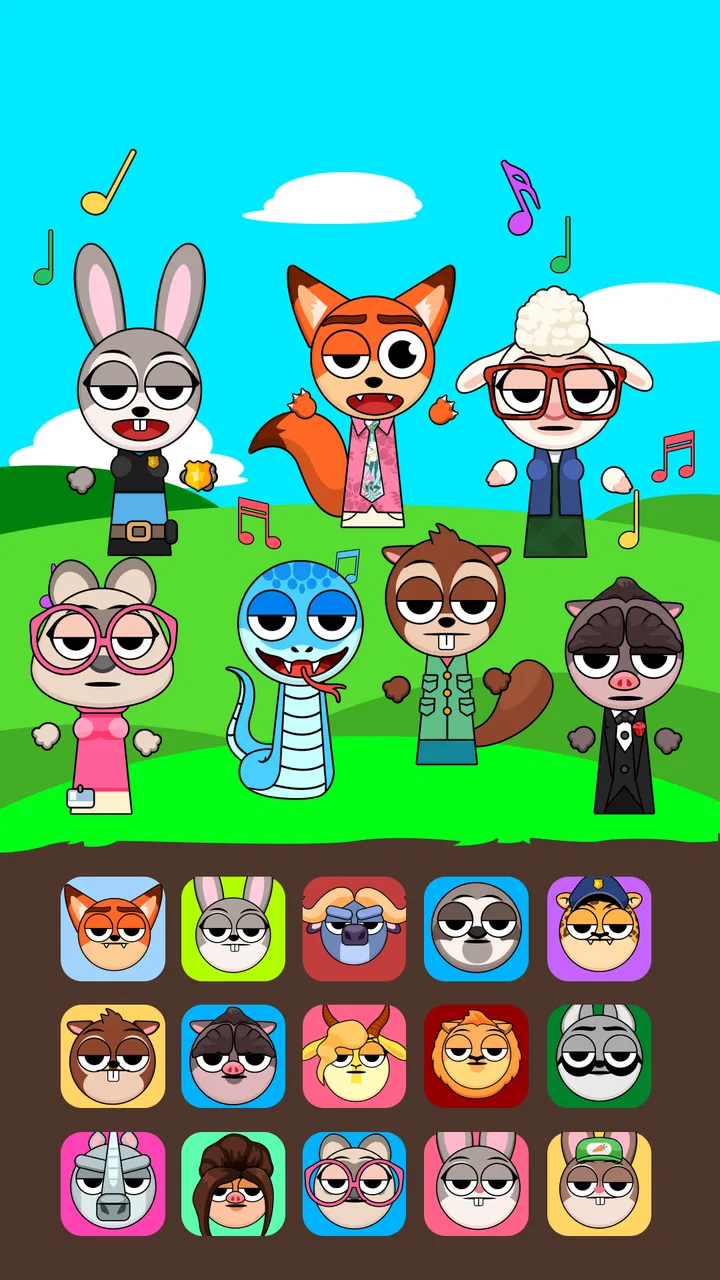
Monster Remix Beat Maker is a free music game built around a playful horror theme: you create, remix, and play beats with monster DJs. I approached it as a first-time player rather than as a serious music-production tool, and that distinction matters. The appeal is the quick combination of rhythm, character-driven presentation, and simple experimentation, not the depth of a full digital audio workstation.
The game is developed by Brocker Bus Studio and sits in the music category, with a Teen content rating. It has reached over a million installs, which suggests that the idea has found a sizeable audience even though its average rating is 3.4. That score feels fair to me: there is a fun core here, but the experience is better suited to casual sessions than to players expecting a polished, endlessly deep rhythm studio.
What to expect from the monster-themed music game
The first thing I noticed is that the horror styling is deliberately light. The monsters give the game its identity, but the tone is more funny and cartoonish than genuinely frightening. That makes it easier to recommend for teenagers and adults who enjoy spooky visuals without wanting an intense horror game. The Teen rating is still worth taking seriously for families, but the overall concept is clearly aimed at playful remixing rather than realistic scares.
You May Also Like

 Blood Strike: 2.5 Anniversary
Blood Strike’s Loadouts Turn Every Drop Into a Tactical Gamble
A close look at Blood Strike’s custom loadouts: how fast access to signature weapons reshapes its battle royale rhythm, rewards preparation, and narrows the gap between fights.

 Pandora - Music & Podcasts
Pandora’s Music Is Easy to Start, but Harder to Recover
Pandora’s strength is its low-effort path from a seed to a station. Its weak spot is how much confidence it asks you to place in connection, setup, and quiet recovery.

 8 Ball Pool
 Is Built on Rivalries, Rematches, and Routine
A close look at the rivalries, rematches, shared routines, and unanswered safety questions that turn a quick pool match into a persistent mobile community.

 Samsung Music
’s Quiet Strength Is Playing What You Already Own
Its reach comes less from spectacle than from dependable access to a personal library. That simplicity is both the app’s strongest retention engine and its ceiling.

 AccuWeather: Weather Radar
AccuWeather Review: A Quick, Clear Forecast for Everyday Decisions
For everyday plans, the best forecast is the one you can understand quickly. AccuWeather makes rain timing, radar, and local conditions easy to act on, with a few trade-offs.

 Hill Climb Racing
Why Hill Climb Racing Still Turns Crashes Into One More Run
A tiny car, a bumpy hill and one more upgrade: Hill Climb Racing keeps resurfacing because its simple chaos makes every near-miss feel personal.
More From Our News Desk



In practical terms, I would describe the game as a small creative playground with rhythm-game energy. You are not simply listening to finished tracks. The point is to interact with beat ideas, try combinations, and find a sequence that sounds satisfying while the monster DJs provide the visual personality. That gives the game a stronger sense of participation than a standard music player, but it also means the fun depends heavily on whether you enjoy experimenting.
Players who want a traditional rhythm game with a fixed stream of notes may find the format unusual. In those games, success usually means following a clearly defined pattern with precise timing. Here, the attraction is more about building a beat and then playing around with it. That difference makes it approachable for beginners, although it may feel less demanding to someone who wants strict score chasing and competitive mastery.
I also would not treat it as a replacement for a proper beat-making application. A production app normally gives you detailed control over recording, editing, mixing, and exporting. This game is designed to make the act of arranging sounds feel immediate and entertaining. That is a strength when you have a few spare minutes, but a limitation when you want to turn an idea into a finished song.
The right mindset before you begin
My best advice is to approach the first session as an experiment rather than a test. You do not need to understand every sound or character immediately. Start by listening to what is already happening, then make one change at a time. If you alter several elements together, it becomes difficult to tell which choice improved the beat and which one made it feel crowded.
This one-change approach is especially useful on a phone. Small screens make it easy to tap the wrong area or lose track of several simultaneous choices. I found that treating each monster DJ as a separate musical ingredient helped me think clearly: first establish a pulse, then add supporting sounds, and only afterward try unusual combinations. That workflow is more reliable than tapping everything as quickly as possible.
The free entry point is another reason the game is easy to try. It lets a curious player find out whether the style works for them before committing money. In-app purchases range from $14.99 to $28.99 per item, so I would avoid buying anything during the first session. Spend enough time learning the basic loop first, then decide whether the extra content or options would genuinely improve how you play.
Getting through the first setup without overthinking it
The game supports Android 8.0 and later, and its current version is 0.3.9. Once installed, I would keep the first launch simple: let the opening presentation establish the mood, look for the main route into the beat-making activity, and resist the temptation to explore every menu before making a sound. A first-time player gets more useful information from creating one short result than from reading every label.
Because this is a music-focused game, headphones can make the opening session more informative. They are not essential for understanding the concept, but they make it easier to distinguish layered sounds and notice when a new element clashes with the existing rhythm. If you are playing in a shared space, keep the volume modest and use the game as a quiet creative break rather than assuming it needs to be loud to be enjoyable.
The visual theme can also distract from the practical goal. Monster characters, expressions, and horror decoration are part of the charm, but they should not become the only thing you interact with. I recommend locating the controls that change the musical arrangement first. Once you know where those are, you can enjoy the presentation without wondering whether you are still in a menu, watching an introduction, or actively changing the beat.
New players often ask whether they need musical knowledge. In my experience, no. You can judge a combination by listening to it. Basic ideas such as a steady pulse or a crowded mix may become obvious as you experiment, but you do not need to know formal rhythm notation. The game works best when your ears guide you more than your technical vocabulary.
A practical first-session routine
I would use the following routine for the first ten or fifteen minutes:
Listen to the starting arrangement without changing anything, so you have a reference point.
Change one musical element and wait long enough to hear its effect.
Return to the original choice if the new sound does not fit, rather than stacking more changes on top of it.
Add one contrasting element, then compare the result with the simpler version.
Keep the combination that feels clearest, even if it is less dramatic than the busiest arrangement.
This is not a formal tutorial, but it is a useful way to avoid the most common beginner problem: producing a messy result and assuming the game itself is confusing. A simple beat that feels coherent is a more meaningful first success than a screen full of effects that you cannot explain.
Another small tip is to pause between changes. Rhythm-based interactions can encourage rapid tapping, yet speed is not always helpful when you are learning. Giving each adjustment a moment to settle lets you identify the role of each sound. It also reduces accidental changes, which can make the experience feel less predictable than it really is.
Finding the first satisfying result
The first meaningful success should be modest. I would aim to create a short arrangement in which the central rhythm remains easy to follow while one or two monster sounds add character. That result teaches you three things at once: how the controls affect the music, how the layers interact, and how much activity your ears can comfortably process.
Once you have that foundation, try removing something instead of always adding something. This is one of the most useful habits in a remix game. A new sound may seem entertaining on its own but weaken the overall beat when combined with others. Removing the least helpful layer can make the remaining elements feel more deliberate, and it gives you a clearer idea of what each monster contributes.
I also recommend making a “quiet” version and a “busy” version of the same idea. The quiet version might use only the elements that keep the pulse clear. The busy version can include more unusual sounds or character moments. Comparing them teaches you whether you prefer the game as a relaxed beat builder or as a playful sound collage.
This comparison reveals an important trade-off. The game’s humor and monster presentation encourage novelty, while good rhythm usually benefits from balance. If you chase every funny sound at once, the arrangement may lose its shape. If you play too cautiously, you may miss the personality that makes this title different from a plain metronome or a conventional music app.
For an everyday use case, imagine waiting for a friend or taking a short break between tasks. You can open the game, build a small beat, and stop once you have found a combination you like. It works well in that situation because there is no need to prepare a long session or understand advanced music production. The activity gives you something creative to do without demanding the commitment of learning a full studio application.
It can also work as a casual activity to share with a younger sibling or friend, provided the Teen rating fits everyone using it. One person can suggest a monster or sound to add, while the other decides whether it improves the arrangement. That turns the game into a small collaborative challenge, even if you are not competing for a score.
Why the first result may sound worse than expected
If your first beat feels cluttered, do not immediately assume you need more content. The stronger fix is usually subtraction and comparison. Return to the simplest arrangement you liked, then introduce changes individually. This creates a dependable baseline and makes it easier to identify the sound that is causing the problem.
Another possibility is that you are judging the result too quickly. Some combinations need a moment before their relationship becomes clear, while others sound awkward immediately. I found it more helpful to listen through a complete short cycle than to decide based on the first instant after a tap. That habit is particularly valuable for anyone who has never used a rhythm creation game before.
Headphones can help here, but they also make flaws more noticeable. If a layered arrangement sounds harsh through headphones, try fewer elements before changing your device or blaming the mix. On a phone speaker, the opposite can happen: some details may disappear, making a crowded arrangement seem simpler than it really is. Testing both listening situations can help you choose combinations that remain enjoyable in ordinary use.
Common confusion and the limits of the experience
The biggest source of confusion is expecting the game to behave like a conventional song-making tool. The store summary emphasizes creating and remixing, but that should not be read as a promise of professional production control. I would use it to explore musical ideas and enjoy the monster theme, not to arrange a complete track for a serious project.
Players who prefer clearly structured goals may also feel uncertain about what they are supposed to do next. In a level-based rhythm game, the next challenge is usually obvious. In a creative beat game, the goal can be self-directed: find a combination you enjoy, test a different mood, or see how much you can change while keeping the rhythm recognizable. If you need constant missions, rankings, or measurable progression, this may feel too open-ended.
The rating of 3.4 from around one thousand ratings reflects that divided appeal. I would not interpret it as proof that the game is poor, but I also would not ignore it. The likely reason for the mixed reaction is that the concept is immediately understandable while the long-term depth may not satisfy every player. Someone seeking a quick novelty experience may be happy, whereas a dedicated rhythm gamer could want more precision and variety.
The number of written reviews is around ten, so the average rating is more useful as a broad signal than as a detailed explanation of every strength and weakness. My own judgment is that the game succeeds most clearly during the first stage of discovery. Whether it remains installed depends on how much you enjoy revisiting combinations after the novelty of the monster DJs becomes familiar.
There is also a financial question. Since the game is free to start but includes individual purchases between $14.99 and $28.99, I would treat paid items as an optional decision rather than part of the basic recommendation. First establish that the core creative loop holds your attention. If you stop playing after a few sessions, paying would not solve the underlying issue. If you routinely return to remix, then the cost becomes a personal value judgment rather than an automatic requirement.
Some readers will wonder whether the game is suitable for children. I would follow the Teen rating rather than making a personal assumption based only on the funny monster artwork. The presentation may look playful, but the official age guidance should be the deciding factor for parents. It is also sensible to supervise purchases on a shared device, especially because the listed prices are substantial for an impulse buy.
Another practical question is whether an older Android phone can run it. Android 8.0 is the stated minimum operating system, so devices below that requirement are not the right target. For compatible phones, I would still close unnecessary apps if the game feels slow and avoid judging the music experience while the device is struggling with other tasks. Those are ordinary troubleshooting steps, but they matter more in a rhythm game where timing and sound should feel consistent.
Who should choose a different kind of app
I would steer serious beat producers toward a dedicated music workstation instead. They will need finer control than this game is intended to provide, along with a workflow for editing and developing a track beyond a playful arrangement. A traditional rhythm game is a better fit for players who want strict timing challenges, clear stages, and repeatable performance goals.
I would also skip it if you dislike cartoon horror styling or if you want a long narrative campaign. The monster DJs are not a minor decoration; they are central to the game’s identity. Likewise, if you mainly want to listen passively, a music-streaming app will be more convenient. This title asks you to participate, and its reward comes from making choices rather than simply pressing play.
On the other hand, beginners who feel intimidated by music software may find this a gentler starting point. It gives you a way to think in layers without requiring you to learn a complicated interface first. That makes it useful as an introduction to basic arrangement ideas, as long as you understand that it is an introduction rather than a complete production course.
Taking the next step after the first beat
After creating one arrangement you like, I would not immediately buy anything or try to use every available option. Instead, recreate the same basic idea with a different balance: keep the pulse, replace one supporting sound, and listen for how the mood changes. This turns a single successful session into a small learning exercise and helps you decide whether the game offers enough variation for your habits.
A useful personal challenge is to make three versions with different purposes: one that feels calm, one that feels energetic, and one that leans hardest into the strange monster personality. The goal is not technical perfection. It is to discover whether you enjoy shaping the mood or merely enjoyed the surprise of the first interaction.
If you are sharing the game with someone else, take turns choosing one change at a time. The rule prevents either player from overwhelming the arrangement and creates a simple conversation about why a sound works. It is a better test of the game’s creative value than tapping randomly, because it makes each decision intentional.
For regular short breaks, I would keep one favorite arrangement as a reference and deliberately make a small variation each time you return. That workflow avoids starting from chaos and gives repeat sessions a purpose. It also helps reveal the game’s long-term strength: not whether it can surprise you once, but whether its sound combinations remain enjoyable when you already understand the basic idea.
Monster Remix Beat Maker is currently free, comes from Brocker Bus Studio, and uses version 0.3.9. With over a million installs, it is easy to see why the accessible monster-and-music concept attracts attention. My recommendation is positive but measured: try it if you want a funny horror-flavored rhythm toy that lets you build quick arrangements, and give yourself a few sessions before deciding whether it has lasting value.
The best way to judge it is to make one clear beat before chasing bigger effects. That approach shows the game at its most enjoyable and prevents the first session from becoming a confusing pile of sounds. If you want a friendly entry into beat layering, it is worth exploring. If you need professional controls, deep progression, or demanding rhythm competition, choose a more specialized alternative instead.
FAQs for Monster Remix Beat Maker
01What is Monster Remix Beat Maker?
Monster Remix Beat Maker is an innovative music production app designed for both amateur and professional musicians. It offers a user-friendly interface with features like loop sequences, a vast library of sound samples, and customizable beat patterns. This app allows you to create, edit, and share your musical creations seamlessly.
02Is Monster Remix Beat Maker suitable for beginners?
Yes, Monster Remix Beat Maker is highly suitable for beginners. The app includes intuitive tutorials and easy-to-use navigation, making it accessible for users with no prior music production experience. Its drag-and-drop functionality and simple interface allow newcomers to start creating beats quickly and effectively.
03What features does Monster Remix Beat Maker offer?
Monster Remix Beat Maker offers a variety of features, including a diverse library of sound samples, customizable beat patterns, and loop sequences. It also includes advanced editing tools, real-time collaboration, and the ability to export tracks in multiple formats. These features make it a powerful tool for music creation on mobile devices.
04Can I collaborate with others using Monster Remix Beat Maker?
Yes, Monster Remix Beat Maker supports real-time collaboration, allowing you to work with friends or other musicians remotely. You can share projects, exchange ideas, and work together on tracks seamlessly. This feature is perfect for collaborative projects and enhances the creative process.
05What are the system requirements for Monster Remix Beat Maker?
Monster Remix Beat Maker is available for both Android and iOS devices. For optimal performance, it requires Android 8.0 or later or iOS 12.0 or later. Make sure your device has sufficient storage space and a stable internet connection, especially for downloading sound packs and sharing projects.
Pros
- Intuitive interface for easy beat creation.
- Wide variety of sound packs available.
- Supports export to multiple formats.
- Regular updates with new features.
- User-friendly for beginners and pros alike.
Cons
- Limited free features without subscription.
- Occasional lag on older devices.
- Sound library might feel limited initially.
- In-app purchases can add up quickly.
- No offline mode for beat sharing.

Monster Remix Beat Maker
Gallery